WEF 2025: A Forum of Action, Not Declarations
The anniversary Eastern Economic Forum, organized by the Roscongress Foundation, in Vladivostok this year felt like a major industrial meeting: a minimum of general remarks, a maximum of "what we're doing tomorrow." A dense program, lively talks "between pavilions," and one overarching theme—strategic materials for new industrialization. Rare and rare earth metals were a constant feature on the agenda, from public administration and science to defense, energy, transport, and electronics.
The tone is set from above: what the President said
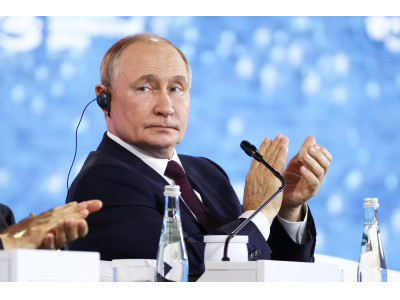
The plenary session set the direction. The Russian President emphasized that rare and rare-earth metals should become the foundation for the launch of new high-tech production facilities within the country. He stated, "We need to implement cutting-edge technologies for the enrichment and processing of rare and rare-earth metal ores. And, of course, stimulate demand for them within Russia at new production facilities." The President also reiterated that a long-term plan for the development of the rare-earth industry has been agreed upon and is scheduled for approval no later than November of this year.
Section on RM and REE: "synchronizing watches" of the entire industry
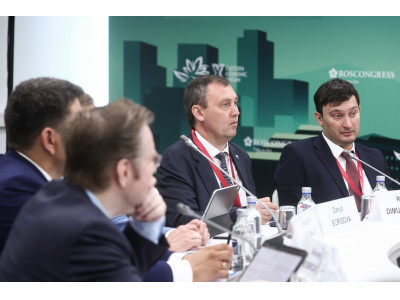
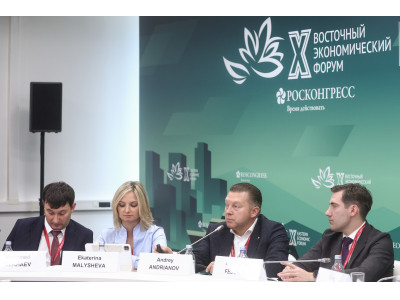
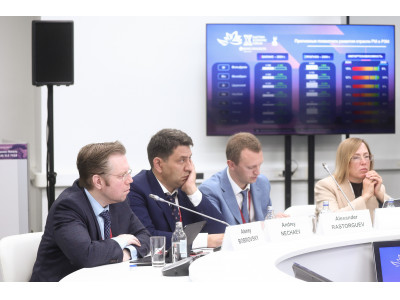
A separate session, "Rare and Rare Earth Metals — an Integral Part of High-Tech Production," proved to be one of the most substantive at the forum. Moderator: Alexey Bobrovsky. Government, science, and business were represented in one room: Oleg Kazanov (Rosnedra), Alexander Osipov (Zabaykalsky Krai), Konstantin Fedorov (Ministry of Industry and Trade), Ruslan Dimukhamedov (Association of Rare and Rare Earth Metals; Solikamsk Magnesium Plant), Magomed Gekhaev (Rosatom Nedra), Andrey Andrianov (Rosatom MetallTech), Andrey Nechaev (Rusredmet Group of Companies), Daria Borisova (SIBUR), Alexander Rastorguev (Shvabe), and Ekaterina Malysheva (N.M. Fedorsky All-Russian Scientific Research Institute of Metallurgical Systems). The session served as a "synchronization of watches" for the industry across the entire value chain: from geology and processing to components, products, and markets.
From raw materials to products: where is the bottleneck?
Russia has abundant raw materials—demand is the deciding factor. Rosnedra Director Oleg Kazanov put it bluntly: "There are more than enough reserves... but demand is the key factor in this discussion." He emphasized that rare earth minerals cannot be viewed as a purely raw materials business—the volumes are small, and projects only take off as part of high-tech production. To put things into perspective, here are some figures: 28.5 million tons of rare earth mineral reserves, approximately 2,500 tons of actual production of the required minerals, and a turnover of approximately 2 billion rubles per year.
What does the Ministry of Industry and Trade do: supply chains, balances, substitution
The ministry's approach is systemic. "We've compiled approximately 24 process chains to identify bottlenecks—from raw materials to finished products," noted Konstantin Fedorov. The key issue is low domestic demand, which is affecting the economics of projects. Therefore, it's necessary to align supply and demand, consolidate the industry, implement import substitution not only for raw materials but also for components, and account for hidden imports of finished products containing rare earth metals—from magnets to batteries.
Voice of Industry: The Multiplier and the Role of the State
Ruslan Dimukhamedov formulated the thesis: "The problem with rare earths is economic, not raw material." He also provided a clear ratio: "By investing 1 ruble in rare earths, you can earn 1,000 rubles on the final product." This is the multiplier that justifies investments in processing, materials, and products—from oilfield services and machine tool manufacturing to drones and robotics, where neodymium magnets are critical. At the same time, the global landscape is changing: restrictions on rare earth exports and incentives in other countries are rapidly reshaping the market and pushing manufacturers to plan sales projects years in advance.
Tech companies' position: "not from scratch—finish and build on it."
"Market consolidation is essential," Andrey Andrianov emphasized. Without it, consumption across the entire value chain will not be economically viable. This isn't about creating a market from scratch, but rather about rapidly expanding existing capacity—by scaling up capacity and targeting demand in aviation, electronics, and transportation (including magnets and powders).
Association Coalition: Who's in it and why?
Rusredmet Group, N. M. Fedorsky VIMS, Rosatom MetallTech LLC, and Solikamsk Magnesium Plant OJSC are members of the Association of Rare-Earth Metals and Metals. Their shared agenda includes closed production chains in Russia, reducing dependence on imports, and transitioning from pilot production to serial production of materials for priority industries.
"Showcase of Opportunities": Rosnedra's stand and exhibits from Association members
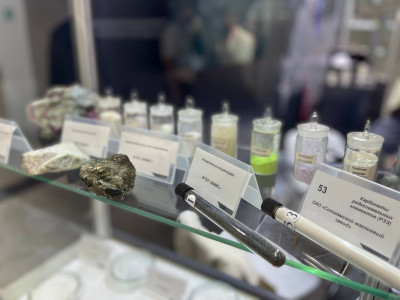
The Rosnedra stand served as a special "stage" at the forum, presenting products from its participants and partners. Among the exhibits were JSC Ilmenite Mining and Processing Plant (TGOK) with ilmenite, zircon, and rutile concentrates, as well as quartz sand; Gipronickel Institute LLC with precursors and cathode materials for lithium-ion batteries, nickel and cobalt salts; Solikamsk Magnesium Plant OJSC with rare earth carbonates and titanium sponge; Lovozersky Mining and Processing Plant LLC with loparite ore and concentrate; VSMPO-AVISMA PJSC and Rosatom MetallTech LLC with titanium and zirconium, including medical implants and powders for additive manufacturing; and KhMZ JSC with lithium metal. This is a real set of "building blocks" for the metallurgy, energy, aerospace, medical, electronics, and battery industries—from raw materials and supplies to products that underpin technological sovereignty.
Bottom line: the raw materials are there – now there are supply chains and long-term demand.
The picture after EEF 2025 is sober and encouraging. The resource base has been confirmed, institutional decisions are in place, and the roadmap is awaiting approval. Next comes value chain engineering: geological exploration → mining → processing → materials → components → products → market. The state is the guarantor of rules and long-term demand; business is the project operator and investor in processing; science is the provider of solutions that reduce costs and risks. With this synchronicity, rare and rare earth metals will cease to be a bottleneck and become a growth driver right now.
Photo: Roscongress, Rosnedra